

A grab rail can make the difference between feeling steady and feeling vulnerable when getting out of the bath, rising from the toilet or stepping through a doorway. But are grab rails safe in every situation? They can be highly effective safety aids, provided the rail is the right type, fitted to a suitable surface and positioned for the person using it.
A poorly placed rail, a loose fixing or a rail attached to an unsuitable wall can create false confidence. The aim is not simply to add something to hold on to. It is to provide dependable support at the exact point where balance, strength or movement is most difficult.
Are grab rails safe when fitted correctly?
Yes. A correctly selected and securely installed grab rail is designed to help a person steady themselves, change position or transfer safely. They are commonly used in bathrooms, toilets, entrances, hallways and beside steps, where wet floors, low seating or changes in level can increase the risk of a fall.
Their safety depends on the full installation, not just the rail itself. The rail must be able to take the force placed through it, including sudden weight if someone slips. It needs appropriate fixings for the wall construction, whether that is solid brick, blockwork, studwork or another surface. A rail that feels firm at first may still become unsafe if it has been fixed only into plasterboard without suitable reinforcement.
It also depends on how the user will grip and use it. Someone with arthritis may need a rail with a comfortable diameter and good clearance from the wall. A person transferring from a wheelchair may need a different position and angle from someone who is simply looking for extra balance when walking.
Where grab rails provide the most benefit
Bathrooms are the most common location because smooth, wet surfaces make slips more likely. A rail beside the toilet can assist with sitting down and standing up, reducing the need to pull on a basin, towel rail or radiator. Near a shower or bath, it gives a reliable point of contact while stepping over an edge, lowering onto a shower seat or drying off.
Grab rails can also be useful at the front or back door, especially where there is a step, narrow threshold or uneven path. In a hallway, a discreet rail may support someone who becomes unsteady when turning or moving between rooms. Beside a bed or chair, a rail can help with standing, although it should be selected for that task rather than treated as a general-purpose handle.
The best location is usually identified by observing the movement that feels unsafe. Notice where a person reaches for furniture, touches the wall, pauses before a step or asks for someone’s arm. These are often the points where a properly fitted rail will be most helpful.
Choosing a safe type of grab rail
Straight grab rails are a practical option for many walls. They can be fitted vertically to help with standing, horizontally for balance while walking, or at an angle where the user needs support both when rising and moving. The right orientation matters as much as the rail length.
Angled rails can be particularly useful beside a toilet. The lower section gives support when pushing up, while the upper section can help a person regain balance once standing. In a shower, a vertical rail near the entrance can help with stepping in, while a horizontal rail within reach of the shower seat may be better for controlled transfers.
Fold-down support rails are often fitted beside a toilet where a wall is only available on one side. They provide a supportive armrest-like grip and can be folded up when not required. Because they may carry significant body weight, they need especially secure mounting and, in some cases, floor support.
Floor-to-wall rails are another option where extra strength is needed or where wall construction is uncertain. They can provide a more substantial support point, but the floor and wall both need to be suitable for installation.
For any style, consider the finish. A textured, non-slip surface can be easier to hold with wet hands, while a contrasting colour may help people with reduced vision identify the rail clearly against the wall. Stainless steel and coated rails are both commonly used, but bathroom rails should be suited to humid conditions and easy to keep clean.
Why suction grab rails need caution
Suction grab rails are different from fixed rails. They can be useful as a temporary handhold on a smooth, non-porous surface, for example while travelling or during short-term recovery. However, they should not be relied on for full body weight or used as a substitute for a properly installed rail.
Their grip can be affected by the surface, moisture, cleaning products, worn suction pads and repeated removal. Tiles with texture, grout lines or uneven areas may not provide a safe seal. If a person needs firm support to prevent a fall, rise from sitting or transfer in and out of a bath, a fixed grab rail is the safer choice.
Check the manufacturer’s instructions carefully before using any portable or suction-mounted product. A rail should only be used for the level of support it is designed to provide.
Correct height and position matter
There is no single safe height for every grab rail because people vary in height, reach, strength and mobility. A rail that works well for one household member may be awkward or even unsafe for another. The position should support a natural movement, without forcing the user to stretch, twist sharply or bend too far.
Beside a toilet, the user should be able to reach the rail while seated and continue holding it as they stand. At a bath or shower, place the rail where it can be reached before stepping over the bath side or threshold, rather than after balance has already been lost. Avoid installing it directly behind the person, as this may encourage an uncomfortable backward reach.
It is often helpful to mark a proposed position with tape and practise the movement before drilling. This simple step can reveal whether the rail is too high, too low, too close to an obstruction or on the wrong side. Where transfers are difficult, input from an occupational therapist or qualified adaptation professional can prevent costly changes later.
Safe installation is not a DIY shortcut
A grab rail is only as safe as the surface and fixings behind it. Solid masonry generally provides a secure base when the correct plugs and screws are used. Stud walls require more care. Fixing directly into a timber stud may be suitable, but the installer must locate the stud accurately. Where this is not possible, additional reinforcement or a specialist fixing method may be needed.
Do not assume that a tiled wall is automatically strong enough. The tile is a finish, not the structure that takes the load. Drilling through tiles also requires suitable tools and care to avoid cracking them or damaging waterproofing. If there is any uncertainty about the wall, arrange professional fitting rather than guessing.
The rail should sit flush and stable against its mounting points. Once fitted, check it by applying controlled pressure in the direction it will be used. It should not rock, turn, pull away from the wall or make movement noises. Never test it by suddenly putting full body weight through it before the installation has been checked.
Checks that keep a grab rail safe
Grab rails do not require complicated maintenance, but they should not be forgotten once installed. Include them in routine cleaning and household safety checks. Look for loose covers, movement at the fixing points, rust marks, cracked coating or damage to the wall around the rail.
In bathrooms, soap residue can make a rail slippery, particularly a smooth chrome finish. Clean it regularly using a product appropriate for the material, then dry it where practical. If the rail has become loose, stop using it for support until it has been inspected and refitted correctly.
A person’s needs can also change. Following surgery, a stroke, a fall or a change in mobility, the existing rail position may no longer match how they move around the home. Reviewing bathroom and entrance support at these times can reduce the risk of another accident.
When a grab rail may not be enough
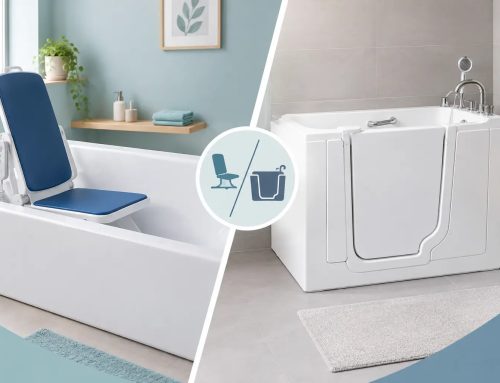
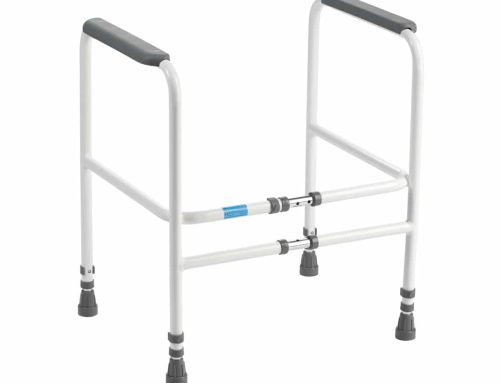
A grab rail improves support, but it cannot solve every access issue. If someone cannot safely step into a bath even with a rail, a bath board, bath lift, shower chair or level-access shower may be more appropriate. If standing from the toilet remains difficult, a raised toilet seat or toilet frame may provide more useful support than a wall rail alone.
Similarly, rails on stairs can assist with confidence, but loose carpet, poor lighting, unsuitable footwear and clutter still need attention. Home safety works best when equipment is considered alongside the whole route a person takes each day.
A grab rail should feel like a dependable part of the home, not something a person has to struggle to reach. Choosing the correct style, position and fitting method gives it the best chance of providing safe, everyday support for years to come.