


Moving someone from bed to chair should not feel like the riskiest part of the day. For many households, it becomes exactly that when mobility changes, strength reduces, or a recent hospital discharge leaves the home setup struggling to keep up. A patient transfer hoist for home can make those everyday moves safer, more controlled and less physically demanding for both the user and the carer.
This is not a one-size-fits-all purchase. The right hoist depends on the user’s mobility, the room layout, the type of transfers needed and whether the equipment will be used occasionally or several times a day. Choosing well matters because a hoist that is too large, too limited or poorly matched to the sling can quickly become difficult to use in practice.
What a patient transfer hoist for home is designed to do
A patient transfer hoist is used to lift and move a person who cannot transfer safely with minimal support alone. In the home, that usually means helping with bed-to-chair, chair-to-commode, floor recovery or bathroom transfers. The main purpose is safety, but the benefit goes further than that. A suitable hoist can reduce strain on the carer, support dignity during transfers and make it easier to maintain routines at home rather than relying on more disruptive workarounds.
Some users have partial weight-bearing ability and only need help to stand and pivot. Others need full lifting support from a seated or lying position. That distinction usually shapes the first and most important decision.
The main types of home hoist
Mobile hoists
A mobile hoist is the most common option for home use. It has a wheeled base, a lifting arm and a spreader bar for attaching the sling. These models suit households that need flexibility, especially where transfers take place in more than one room. Many fold or dismantle for storage or transport, which can be useful if space is tight or the hoist needs to travel with the user.
The trade-off is floor space. Mobile hoists need enough room to position the legs around or under furniture, and not every bed or chair gives the required clearance. Carpet, thresholds and narrow doorways can also affect manoeuvrability.
Stand aids and sit-to-stand hoists
If the user can take some weight through their legs and follow instructions, a sit-to-stand hoist may be more suitable than a full lifting hoist. These models support standing transfers rather than lifting the person in a full body sling. They can be quicker for short moves and often feel less clinical in everyday use.
They are not suitable for users with very limited trunk control, severe weakness or unpredictable balance. A stand aid can be an excellent solution, but only if the user can use it consistently and safely.
Ceiling track hoists
A ceiling hoist runs on a fixed track and can be ideal where regular transfers are needed in the same room or between connected areas. It saves floor space and avoids pushing a mobile frame around furniture. For some homes, especially those adapted for long-term care, it offers the smoothest day-to-day setup.
This option needs installation and is less flexible than a mobile hoist if needs change or rooms are rearranged. Structural suitability and layout matter, so it tends to be a more planned solution rather than a quick purchase.
How to assess what the user actually needs
The most reliable starting point is the transfer itself. Think about where the move begins, where it ends and how much help is currently needed. A person who can sit upright, hold themselves steady and bear some weight has different equipment needs from someone who needs full support from bed.
It also helps to consider how often the hoist will be used. A lightweight portable model may suit occasional use, but frequent daily transfers often justify a more substantial design with a stronger lifting range and easier handling. If the user’s condition is likely to change, it is worth thinking ahead rather than buying only for current needs.
Comfort and confidence matter as much as specification. A technically suitable hoist may still be the wrong choice if it feels unsettling to the user or awkward for the carer to operate.
Safe working load and lifting range
Weight capacity should never be treated as a rough guide. The safe working load must comfortably cover the user’s weight, with the correct sling included in that calculation where relevant. Buying too close to the limit is rarely wise, especially if winter clothing, pressure care needs or body shape affect sling fit.
Lifting range is just as important. The hoist needs to lower enough for the chair, commode or floor pickup involved, and raise high enough for bed transfers without forcing poor positioning. This is where product dimensions make a real difference. A hoist can look suitable in general terms and still fail on lift height or under-bed clearance.
Why the sling is not a small detail
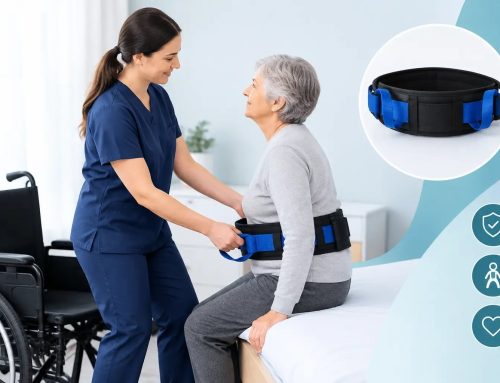
The sling is central to both safety and comfort. Different sling shapes support different transfer types, and the wrong sling can make an otherwise suitable hoist difficult to use. Some are designed for general seated transfers, while others are better for toileting, amputee support, hygiene routines or users with reduced head control.
Sizing also matters. Too small and the user may feel unsupported or cramped. Too large and the positioning can be unstable. Fabric choice can affect drying time, skin comfort and bathroom use. This is one area where practical advice is especially valuable, because the best setup depends on the user rather than just the hoist frame.
Space, flooring and furniture checks at home
A home hoist has to work in the room, not just on the product page. Measure door widths, turning areas and the clearance under beds, riser recliners and sofas. Check whether the hoist legs need to open around furniture, and whether castors will move smoothly over the flooring in each room.
Small domestic details often decide whether a hoist is easy to live with. Thick rugs, narrow hallways, bulky bedside furniture and low divan bases can all create problems. If bathroom transfers are part of the plan, moisture resistance and manoeuvrability in tighter spaces become more relevant.
Manual or electric operation
Many home hoists use electric lifting with a handset control, which reduces physical effort and makes repeated transfers easier. Battery charging should be simple and reliable, especially in busy households where the hoist may be used several times a day. Emergency lowering features are also worth checking.
Manual hydraulic hoists are still available and may suit some settings, particularly where budget is tight or use is less frequent. They can be dependable, but they require more effort from the carer and may feel slower during routine transfers. It depends on who will be operating the hoist and how often.
Buying for a temporary need or a long-term setup
Not every home hoist is bought for permanent use. Some households need support after surgery, illness or a period of rehabilitation. In those cases, portability, simpler storage and short-term value may take priority. For longer-term conditions, durability, servicing support and compatibility with different slings often become more important.
This is also where wider mobility planning helps. A hoist may solve one transfer problem, but the overall setup might also involve a profiling bed, riser recliner, commode, pressure care equipment or bathroom aids. Looking at the home as a joined-up environment usually leads to a better result than treating each item in isolation.
When specialist advice makes the difference
A patient transfer hoist for home use is a practical purchase, but it is rarely a casual one. If there is any uncertainty about transfer method, user ability, sling selection or room suitability, specialist advice is worth seeking before ordering. A dependable mobility retailer can help narrow down the right category, compare options and flag issues that are easy to miss, especially for first-time buyers.
For UK families balancing care needs, space limitations and budget, the best hoist is usually the one that fits the real routine at home without adding complexity. Sheen Mobility supports that process by offering a broad range of mobility and transfer equipment alongside practical product guidance.
A hoist should make daily life calmer, not more complicated. If you start with the user’s transfer needs, the home layout and the right sling setup, you are far more likely to choose equipment that feels safe, usable and genuinely helpful from day one.