


A smooth supermarket floor can make almost any walking aid feel adequate. Uneven pavements, dropped kerbs, gravel paths and wet leaves quickly show the difference between a basic indoor frame and the best rollator for outdoor use. For regular trips outside, the right model should feel stable and controlled without becoming difficult to lift, steer or store.
Outdoor rollators are not one-size-fits-all. A person walking locally on level pavements may value a lightweight folding frame, while someone using country paths or rough car parks may need larger wheels and a stronger frame. The most suitable choice comes from matching the rollator to the places it will actually be used.
What Makes a Rollator Suitable for Outdoors?
A rollator designed for outdoor use needs to cope with changing surfaces while helping the user maintain a natural, upright walking position. It should roll freely over pavement joins and small bumps, turn predictably, and stop securely when the hand brakes are applied.
Large wheels are usually the starting point. Wheels around 8 inches or larger tend to handle uneven paving, loose stones and kerbs better than smaller indoor-style wheels. They are less likely to catch in surface gaps and usually make for a more comfortable ride. Pneumatic tyres can offer additional cushioning and grip, although they require occasional pressure checks. Solid tyres need less maintenance and remove the risk of punctures, but may feel firmer over rough ground.
Frame design matters just as much. A wider, heavier rollator may feel very secure outdoors, but can be harder to manoeuvre through narrow shop aisles, doorways or hallways. A lighter model is easier to lift into a car boot, yet it must still have enough strength and stability for the user and their usual routes.
Three-wheel or four-wheel rollator?
Three-wheel rollators are often lighter and more manoeuvrable. Their narrow turning circle can be useful in small shops, at home and on busy pavements. However, they do not normally include a seat and are generally less stable than four-wheel designs, particularly where ground is uneven or the user needs to pause frequently.
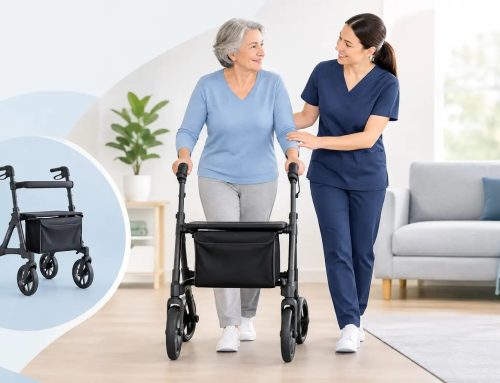
For most people seeking an outdoor walking aid, a four-wheel rollator is the more practical option. It provides a broader base, typically includes a seat, and often has a storage bag or basket. This makes it useful for appointments, shopping trips and longer walks. The trade-off is a larger frame and, in some cases, more weight to manage when folding or lifting it.
Key Features to Compare Before Buying
The product specification should support everyday use, not simply look good on paper. Start with the user’s height, weight and walking ability, then consider transport, storage and the local terrain.
Handle height and walking position
Adjustable handles are essential for a comfortable fit. When standing within the rollator, the handles should sit roughly at wrist height with the arms relaxed by the sides. Handles that are too low can cause stooping and place strain on the back. Handles that are too high can make it harder to apply the brakes safely.
Check both the minimum and maximum handle height rather than assuming all adjustable rollators will fit. This is particularly relevant for shorter users and taller users, who may find a standard range unsuitable.
Brakes that are easy to use
Outdoor rollators should have cable-operated hand brakes on both handles. The user needs enough hand strength and dexterity to squeeze the levers while walking and to push or pull them into the parking-brake position before sitting down.
A useful test is whether the brakes can be operated while wearing gloves or with reduced grip strength. Brake cables should also be checked regularly. If braking feels uneven, weak or stiff, arrange servicing before relying on the rollator outdoors.
Seat, backrest and carrying capacity
A seat is valuable for anyone who needs regular rests. Look at its height, width and maximum user weight, not just whether a seat is included. Feet should reach the ground comfortably when seated, and the rollator must always be parked with both brakes locked before use as a seat.
Many models have a fabric backrest, while others use a more supportive curved design. A backrest can make short rests more comfortable, but it is not a substitute for a chair with full postural support. If the user needs prolonged seated support, a wheelchair or mobility scooter may be more appropriate for longer outings.
A bag or basket is useful for essentials such as a mobile phone, medication, purse and a light coat. Check the stated bag capacity and avoid hanging heavy shopping from the handles. Extra weight high on the frame can make the rollator unstable, especially on a slope.
Folding, lifting and storage
A rollator that folds easily is more likely to be used. Consider who will fold it, whether it needs to fit into a particular car boot, and where it will be kept at home. Some rollators fold side to side, while others fold front to back. The folded width, depth and weight are all worth checking.
Lightweight aluminium rollators are often a sensible choice for regular car journeys. However, the lightest option is not automatically the best option for rougher routes. If the rollator will be lifted frequently, it may help to have a family member or carer practise lifting it safely before purchase.
Choose for the Ground You Cover Most Often
The best rollator for outdoor use is usually the one that suits the most demanding part of a normal journey. Consider the route from the front door to the pavement, the condition of nearby paths, the local shops and the surfaces around GP surgeries or hospital entrances.
For level town pavements and indoor shopping centres, a medium-weight four-wheel rollator with solid tyres, a seat and a practical bag may be sufficient. For uneven pavements, parks and rougher access routes, prioritise larger wheels, a stable wheelbase and comfortable handles. For compact travel, look closely at folded dimensions and lifting weight, while accepting that a highly compact frame may be less comfortable over poor surfaces.
It is also worth thinking about gradients. No rollator should be treated as a device for controlling a steep slope. On hills, users should take smaller steps, keep close to the frame and use the brakes carefully rather than continuously dragging them. If a route involves steep or frequent inclines, specialist advice can help identify whether a rollator remains the right mobility solution.
A Practical Pre-Purchase Check
Before making a decision, confirm the following details against the user’s needs:
- Handle-height range and the user’s standing height.
- Maximum user weight, including any items normally carried.
- Wheel diameter, tyre type and suitability for local surfaces.
- Brake operation and parking-brake ease.
- Seat size, seat height and comfort for short rests.
- Rollator weight, folded dimensions and car boot space.
- The width needed for front doors, hallways and favourite shops.
If possible, test the rollator with normal footwear and on a surface that is not perfectly smooth. Check that it turns without excessive effort, that the user can reach the brakes confidently, and that they do not feel tempted to lean heavily forward onto the handles. A rollator is designed to support balance and walking, not to carry the full weight of the user.
Safe Use Outside the Home
Regular checks keep an outdoor rollator dependable. Inspect tyres for wear, ensure wheels rotate freely, and look for loose fittings or frayed brake cables. Keep mud and grit away from moving parts after wet walks. Bags should be secured, reflectors kept visible and brakes engaged whenever the rollator is parked.
Take care at kerbs. Where there is a dropped kerb, use it rather than trying to lift the rollator over a high edge. On loose gravel, wet grass, icy paths or heavily cambered pavements, progress slowly and consider whether another route is safer. A rollator can improve confidence outdoors, but it cannot remove every trip or slip risk.
The right choice should make leaving the house feel more manageable, whether the destination is the corner shop, a local park or a family visit. Focus on fit, braking, wheels and the routes that matter most, then choose a rollator that supports safe, comfortable independence day after day.