


A wet floor, a low toilet or a high-sided bath can turn a familiar room into the most difficult part of the home. The best bathroom aids for seniors are not necessarily the most extensive or expensive options. They are the ones that address the specific point where standing, stepping, sitting or washing has become less safe or less comfortable.
For many households, a small change such as a securely fitted grab rail or raised toilet seat can make daily routines more manageable straight away. Where mobility is more limited, a combination of aids – or a larger adaptation such as a wet room or walk-in bath – may be the more suitable long-term choice. The starting point is to look at how the bathroom is used now, rather than buying equipment based on appearance alone.
Choosing the best bathroom aids for seniors
Bathroom equipment should support independence without creating a new obstacle. Consider the user’s balance, grip strength, ability to transfer from sitting to standing, and whether they use a walking frame, wheelchair or other mobility aid. Also assess the bathroom itself: available floor space, door width, wall construction, existing shower arrangement and the height of the toilet all affect what will fit safely.
A product’s weight limit and dimensions matter as much as its general category. Check whether a shower chair will sit level in the shower area, whether a toilet frame allows enough room to turn, and whether the user can reach the controls and towels without overreaching. For a person recovering from hip or knee surgery, keeping within movement restrictions may be a priority. For someone with reduced hand strength, stable armrests and simple adjustment controls can be more useful than a feature-heavy design.
Avoid treating suction fittings as a substitute for a properly installed rail. Suction grab handles can be useful as temporary balance aids on smooth, clean surfaces when used correctly, but they should not be relied on to take full body weight. Fixed grab rails need a sound wall and appropriate fittings, particularly where the user will pull strongly during a transfer.
Shower and bathing aids
Shower chairs and shower stools
A shower chair gives the user a stable place to sit while washing, reducing the amount of standing required on a wet surface. Models with a backrest and armrests generally offer more support for people who find it difficult to lower themselves or rise again. A simple shower stool takes up less room and can suit someone with good balance who only needs a seated rest.
Height-adjustable legs are helpful where the shower tray is uneven or where the user needs a particular seat height. Look for non-slip feet and a corrosion-resistant frame. If the shower has a raised lip, check that getting into it remains safe – a chair alone does not remove the risk of stepping over a high tray.
Bath boards and bath seats
A bath board spans the sides of the bath, allowing the user to sit on the edge and move across in stages rather than lowering to the bottom. This can be a practical choice for someone who can still lift their legs into the bath with limited assistance. Some boards include a handle or built-in seat section for added reassurance.
Bath seats sit inside the bath and reduce the depth of the lowering movement. They can be useful where a bath board is not appropriate, but the person must still be able to step over the bath side. A bath lift provides greater assistance for users who cannot safely lower into or rise from a conventional bath. It is a more substantial purchase, so bath shape, user weight and transfer ability should be checked carefully before choosing one.
Long-handled washing aids
A long-handled sponge or body washer can make it easier to wash feet, lower legs and the back without twisting or bending. This is a modest aid, but it can make a genuine difference for people with arthritis, back pain or restricted hip movement. Choose a handle that is easy to grip even when hands are wet, and replace the sponge head when it begins to wear.
Toilet aids that make transfers easier
A standard toilet can be too low for someone with painful joints, weak legs or restricted movement after an operation. A raised toilet seat reduces the distance required to sit and stand. It should fit the toilet pan securely, remain stable during use and provide the right increase in height – higher is not always better if it leaves the user’s feet unsupported on the floor.
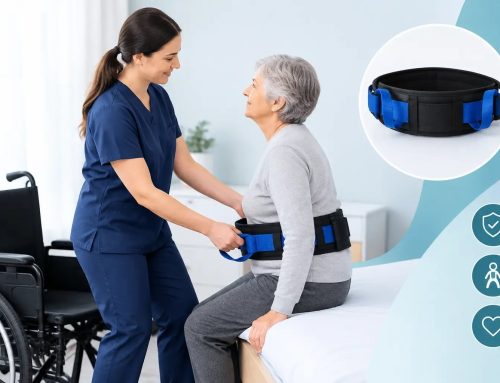
For more support, consider a raised toilet seat with integral arms or a separate toilet frame. Armrests give the user a firm point from which to push up, while a free-standing frame can be a good option where fitting rails to the wall is not possible. Make sure there is enough room around the toilet for the frame and that it does not block access for a carer where assistance is needed.
A toileting aid or bottom wiper can also support personal hygiene for people with limited reach. This may feel like a small detail, but retaining privacy during personal care can have a significant effect on confidence and independence.
Grab rails and support rails
Grab rails are among the most effective bathroom safety aids when positioned correctly. They can provide support beside the toilet, at the basin, near the shower entrance and at the point where a person gets in or out of the bath. The position should reflect the actual movement being made. A rail placed too high, too far forward or on the wrong side may offer little practical help.
Straight rails suit many locations, while angled rails can support both pushing up and steadying oneself during a transfer. Fold-down support rails are often useful beside a toilet where wall space is limited or wheelchair access is required. Contrasting rail colours can also help a person with reduced vision identify the support more easily against pale bathroom walls.
Professional fitting is advisable for fixed rails. Tiles, plasterboard and stud walls may need specialist fixings or structural reinforcement. A rail that moves even slightly should not be used until it has been checked and secured.
Reducing slips without creating clutter
Non-slip bath and shower mats can improve footing, provided they are kept clean and secured properly. Choose mats that suit the surface and remove them periodically to clean underneath, as soap residue can reduce grip. Outside the shower or bath, a non-slip mat with a low profile can help keep water from spreading across the floor.
Good lighting is another practical bathroom aid. A bright, evenly lit route from the bedroom to the bathroom can reduce night-time falls, especially where vision is affected by glare or low contrast. Motion-sensor night lights may be useful, but they should not create trailing leads or obstruct walkways.
Keep frequently used items within easy reach. A wall-mounted shower caddy, a stable shelf or a reachable towel rail can prevent unnecessary bending and stretching. Bathroom safety is often improved as much by removing hazards – loose mats, overflowing storage and awkwardly placed toiletries – as by adding equipment.
When a larger bathroom adaptation is the better option
Individual aids work well when the main layout remains accessible. However, a person who can no longer step over a bath side safely may need more than a bath board or rail. A level-access shower or wet room removes the threshold and can allow space for a shower chair, wheeled commode or carer assistance. It may also be easier to clean and manage over time.
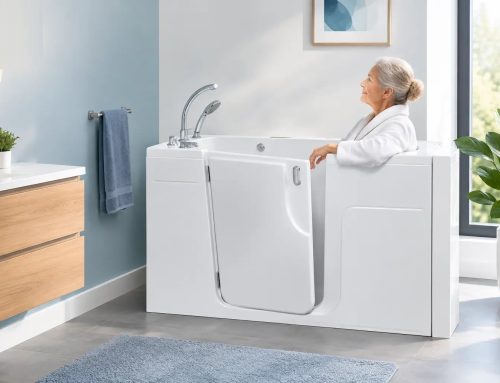
Walk-in baths can suit users who prefer bathing and are able to manage the door and the time required to fill and empty the bath. They are not the right answer for every household. The user may need to sit inside while the water level changes, and the room layout, plumbing and future mobility needs should all be considered.
For major changes, think beyond the immediate problem. Door widths, turning space, heating, flooring, drainage and access for a walking aid or wheelchair can determine whether an adaptation remains suitable as needs change. Sheen Mobility can help customers compare everyday bathroom aids alongside wider home accessibility options, helping make the buying process more straightforward.
A practical checklist before buying
Before selecting equipment, measure the available space and the key fixtures. Note the height of the toilet, width of the bath, shower tray dimensions and the clear space needed for doors to open. Check the user’s current weight against the product’s maximum user weight, and consider whether a carer needs access on one side.
It is also sensible to trial the movement without equipment where safe to do so. Observe where the person naturally reaches for support, whether they can turn safely, and where they become unsteady. This often identifies the right product category more clearly than a general description of mobility level.
A well-chosen bathroom aid should make a daily task feel less demanding, not turn it into another procedure. Start with the transfer or activity that causes the most concern, measure carefully, and choose support that fits both the person and the room.