

Moving from bed to chair should not leave a person feeling rushed, unstable or dependent on unsafe manual handling. Transfer hoists provide supported lifting for people who cannot stand safely, bear sufficient weight or reposition themselves without help. For many households, they make everyday care more comfortable for the user and more manageable for family members and paid carers.
The right hoist is not simply the one with the highest lifting capacity. It must suit the person’s mobility, posture, weight and transfer routine, as well as the layout of the home. Door widths, flooring, bed height, chair type and bathroom access all affect whether a particular model will work well in practice.
What Are Transfer Hoists Used For?
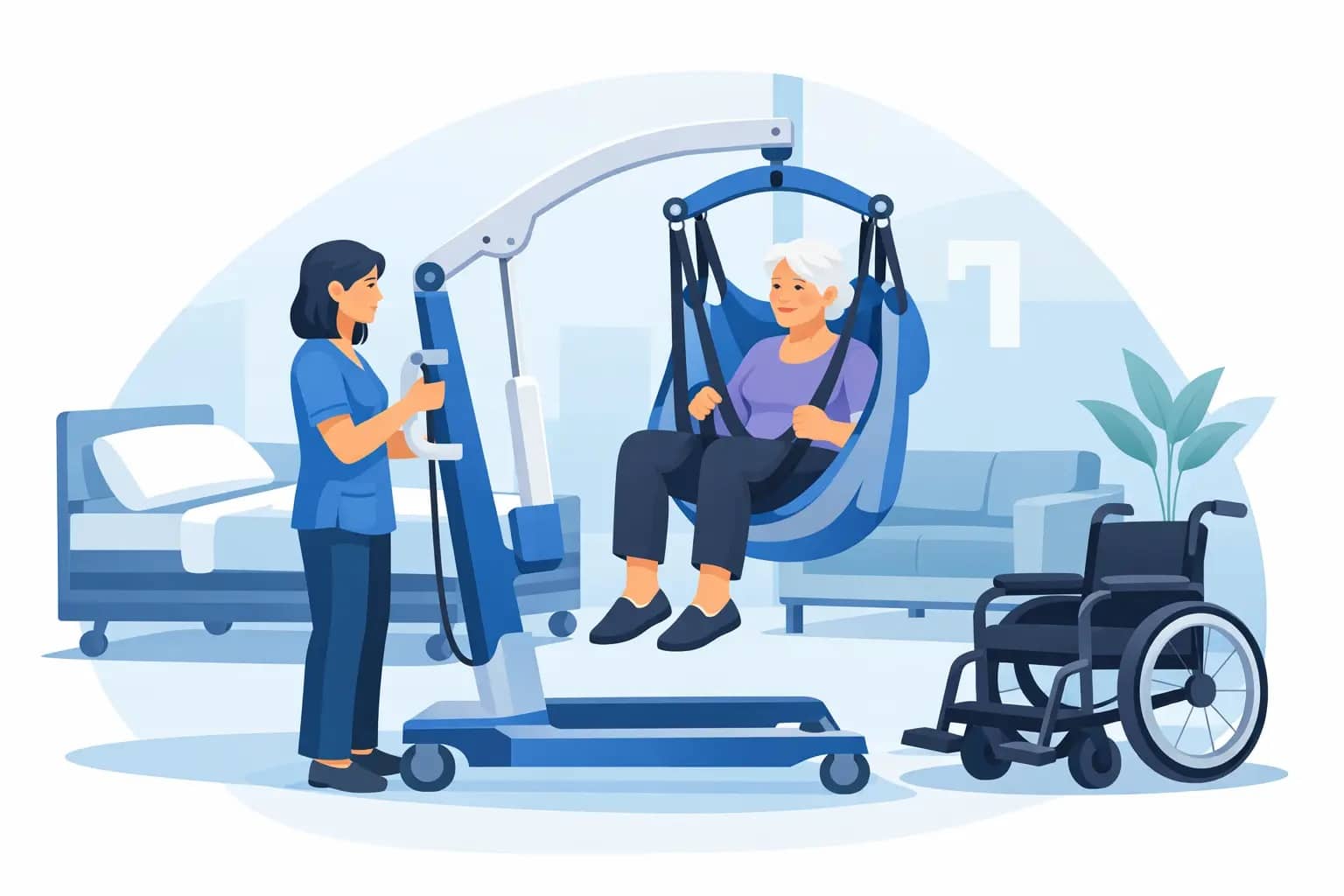
A transfer hoist is a lifting aid designed to move a person between two positions while reducing the need for manual lifting. Common transfers include moving from a bed to a wheelchair, wheelchair to toilet, chair to chair, or floor to bed following a fall where appropriate equipment and trained assistance are available.
Most hoists use a spreader bar and a compatible sling to support the user during the transfer. The sling is positioned around or beneath the person, then attached to the hoist. A powered lifting mechanism raises them gradually, allowing the carer to guide the movement and position the person over the destination surface.
A hoist does not remove the need for good care practice. It should be used by someone who understands the equipment, has been shown how to fit the sling correctly and can assess whether the person is comfortable throughout the move. Where mobility or health needs have changed, professional moving and handling advice is especially valuable.
Choosing Between Mobile and Ceiling Transfer Hoists
The main choice is usually between a mobile floor hoist and an overhead ceiling hoist. Both can provide effective transfers, but they suit different homes and routines.
Mobile floor hoists
Mobile hoists have a wheeled base that moves across the floor. They are a practical option where equipment may need to be used in more than one room, or where a permanent installation is not suitable. Many models have electrically operated lifting and leg-opening functions, helping the base fit around chairs, commodes and other furniture.
The trade-off is space. A floor hoist needs room to manoeuvre, and its legs must pass beneath the bed, chair or other surface. Deep-pile carpet, narrow doorways, crowded bedrooms and low-clearance furniture can all create difficulties. Before buying, measure the narrowest routes the hoist must take, not just the room where it will usually be stored.
Ceiling hoists
Ceiling hoists travel on an overhead track. They keep the floor clear and can be particularly useful in smaller bedrooms, bathrooms or rooms where a mobile hoist would be hard to turn. A track can be installed in one area for direct transfers, or designed to cover a route between rooms where the property allows.
This type of system requires a survey and fitting plan. The structure of the ceiling, track route, doorways and the user’s regular transfer points all need consideration. It is a more permanent home adaptation, but it can reduce clutter and create a more consistent transfer route for long-term care needs.
The User’s Ability Should Lead the Decision
A full-body hoist is generally intended for someone who has limited or no safe weight-bearing ability. However, people with some standing strength may be better suited to a standing transfer aid or sit-to-stand hoist. These support an assisted rise rather than a fully suspended lift.
This distinction matters. Using a standing aid for someone who cannot reliably hold their position can be unsafe and uncomfortable. Equally, choosing a full hoist when a person can take part in a supported stand may reduce opportunities to maintain strength and confidence. The correct option depends on the individual’s balance, leg strength, upper-body control, cognition and ability to follow instructions.
Consider how the person sits as well as how they stand. Someone with poor trunk control may require a more supportive sling with head support, while a person with stable upper-body control may prefer a sling that is easier to position and remove. Dignity is part of suitability too. Toileting slings, for example, may be useful for toilet transfers but are not normally designed for extended sitting.
Key Features to Check Before You Buy
Product specifications are useful only when matched to the real environment and user. Check the safe working load of the hoist, but include the sling and any accessories when considering total supported weight. Never assume that a higher maximum capacity makes every hoist suitable for every user.
Look at the lifting range. The boom must lift high enough to clear the destination surface and lower sufficiently for the starting position. A low bed, a high-rise recliner, a wheelchair with armrests and a changing bench can each alter the required range.
Battery operation is common on electric mobile hoists. Consider how and where the unit will be charged, how long the battery lasts under typical use and whether a battery status display is provided. An emergency stop and emergency lowering function are essential features, but they are not a substitute for routine charging and inspection.
For mobile models, base width and leg adjustment affect access around furniture. A narrow base may pass through tighter spaces, while an adjustable or powered opening base can offer better stability and clearance around wider chairs. Castor quality also matters, particularly on carpet or uneven flooring.
Noise level, handset simplicity and ease of cleaning may seem secondary at first. They become more significant when the equipment is used several times a day. A clear handset with well-spaced buttons can make transfers less stressful for carers, while wipe-clean surfaces support everyday hygiene.
Slings Are Not a One-Size-Fits-All Accessory
The sling is the part of the system in direct contact with the user, so its size, shape and material deserve the same attention as the hoist itself. A sling that is too large can allow poor positioning; one that is too small can feel restrictive and create pressure in the wrong areas.
Common designs include general-purpose full-body slings, slings with head support, toileting slings, amputee slings and hammocks for specific care situations. Mesh materials can be useful for bathing and showering because they dry quickly, while padded or polyester options may be preferred for longer transfers or more sensitive skin. The best material depends on the transfer task and the person’s comfort.
Compatibility is critical. Different hoists use different attachment systems, such as loop straps or clip fixings. Do not use a sling with a hoist unless the manufacturer confirms that it is compatible. Check sling labels and lifting loop condition regularly, and follow the cleaning instructions to preserve the fabric and stitching.
Preparing the Home for Safer Transfers
A successful transfer begins before the lift starts. Keep the route clear, position the destination chair or wheelchair appropriately and ensure brakes are used as instructed by the equipment manufacturer. Remove loose rugs where they obstruct wheeled equipment, and avoid trying to force a hoist over thresholds that it cannot cross safely.
The destination surface should be stable and at a workable height. In some homes, a profiling bed, suitable chair or toileting equipment can make as much difference to the transfer as the hoist itself. If an existing bed has very low clearance underneath, a mobile hoist may not be able to position correctly, making an overhead system or alternative furniture arrangement worth considering.
Carers should also have room to work without twisting, reaching or trapping their feet beneath the equipment. A compact room can make a transfer possible but still difficult to carry out safely day after day. Measuring the space and discussing the usual routine before ordering can prevent an unsuitable purchase.
Training, Checks and Ongoing Support
Hoists are lifting equipment and should be maintained accordingly. Read the operating instructions, inspect the equipment before use and arrange servicing in line with the manufacturer’s guidance and the setting in which it is used. For professional care environments, formal inspection requirements may apply. Private households should still take regular checks seriously.
Before each transfer, check that the battery is charged, the sling is undamaged, attachments are secure and the hoist moves normally. Do not use the equipment if there are signs of wear, unusual noises, damaged straps or unreliable controls. Keep a record of servicing and any replacement parts, particularly when more than one person provides care.
It is also sensible to review the setup after a hospital discharge, a fall, weight change or noticeable change in mobility. Equipment that was suitable six months ago may no longer provide the right support. Sheen Mobility can help customers compare mobility equipment options and identify the practical details to check before choosing.
The best transfer arrangement is one that fits the person, the carer and the home without turning a routine movement into a daily obstacle. Taking time to assess the space, sling and support needs can make each transfer calmer, safer and more dignified.