


A rise recliner can make sitting down and standing up less demanding, but it must be used in the right position and at the right pace. Knowing how to use a rise recliner safely helps reduce the risk of slips, falls, trapped cables and strain during everyday transfers.
A rise recliner is designed to support comfort and independence, not to rush someone to their feet. Whether it is used after surgery, alongside a long-term condition or simply to make daily seating more manageable, a few simple checks can make a meaningful difference.
Set up the rise recliner correctly
Safety starts before anyone sits in the chair. Position the recliner on a level, stable floor with enough clear space in front for the footrest and at the rear for the backrest to recline. Check the product instructions for the clearance required by that specific model. A chair pushed too close to a wall, radiator or cabinet may be damaged when it moves, or may stop short of its full range.
Keep the area around the chair free from footstools, side tables, pet beds, loose rugs and trailing wires. These can become trip hazards when the user steps forward from the raised seat. The route to and from the chair should be clear, well lit and wide enough for any walking frame, stick or other aid used by the person.
The power lead and transformer should be protected from crushing, moisture and heat. Avoid running cables under a rug or across a busy walkway. Where the chair has a battery backup, check that it is installed and maintained in line with the manufacturer’s guidance. This can be particularly useful during a power cut, but the user should still know that the chair may have limited movements while operating on backup power.
Before regular use, check that the chair is suitable for the user’s height, weight and mobility needs. The seat height, depth, arm height and maximum user weight all matter. A chair that is too deep can make it difficult to reach the backrest and stand safely. One that is too high or narrow may leave the feet unsupported or make transfers awkward.
How to use a rise recliner safely when sitting down
Approach the chair slowly and turn until the backs of both legs can feel the front edge of the seat. Do not sit down while the chair is raised, reclined or with the footrest extended. Return it to its normal upright seating position first.
Hold the armrests where possible, rather than grabbing the handset cable, side pocket or moving footrest. Feel for the seat behind you, then lower yourself in a controlled way. If a walking frame is used, do not pull on it for support while sitting, as it can move unexpectedly. Place it within easy reach once seated, without leaving it where it could obstruct the chair’s movement.
Once settled, make sure the lower back is supported and both feet are positioned safely. Depending on the user and chair design, feet may rest on the floor or on the fully extended footrest. Avoid sitting with feet tucked under the chair, as they could be caught when the mechanism moves.
If the user struggles to lower themselves into the seat, or drops heavily onto it, the issue may be the chair’s size, its position or a change in mobility. A physiotherapist, occupational therapist or healthcare professional can assess transfer technique and advise whether additional equipment is needed.
Use the handset slowly and deliberately
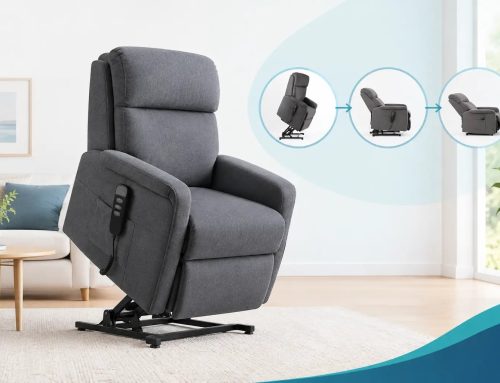
Most rise recliners use a simple handset with buttons for reclining, raising the footrest and lifting the seat. Some models have one motor, where the backrest and footrest move together. Dual-motor models allow the backrest and footrest to be adjusted separately. Always identify which controls do what before relying on the chair alone.
Use one movement at a time where possible and keep the handset in hand until the chair has stopped. Do not press controls accidentally while repositioning a blanket, reaching into a side pocket or helping someone transfer. When the chair is not in use, place the handset where it can be reached easily but cannot be sat on or pulled by a child.
Move gradually, especially on first use. A small adjustment to the backrest or leg rest may be all that is needed for comfort. Reclining too far too quickly can feel unsettling, particularly for someone with dizziness, poor balance or reduced sensation in their legs.
Check that clothing, blankets, continence pads, dressing gowns and pet tails are clear of moving sections before operating the chair. Never allow a child or pet beneath, behind or on the footrest while the recliner is moving. A rise recliner is not a toy, and the moving mechanism should only be operated by a responsible adult or carer.
Stand up using the rising function
The rise function should bring the user to a supported near-standing position, not lift them straight into a walk. Before using it, put on secure footwear with a firm sole. Slippers without backs, loose socks and bare feet can increase the chance of slipping once upright.
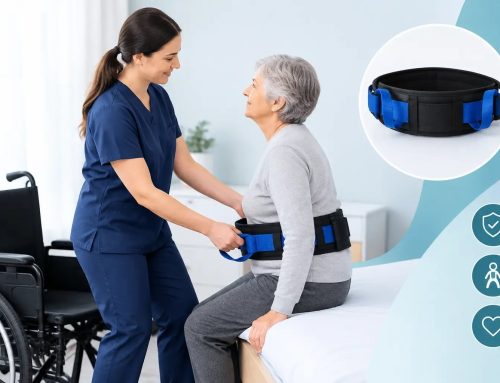
Ensure a walking aid is nearby, positioned in front of the chair but far enough away that it will not be caught by the footrest. If the person needs assistance from a carer, agree the transfer before pressing the control. The carer should not pull the person up by their arms or allow themselves to be trapped between the chair and nearby furniture.
Press and hold the rise control, allowing the chair to move slowly. Keep both feet flat on the floor as soon as they can reach it. The user should place their hands on the armrests, lean slightly forward when appropriate and wait until they feel balanced before stepping away.
Do not walk off while the chair is still rising, and do not use the chair as a step to reach shelves, curtains or windows. When the user is safely standing, return the chair to its normal seated position if it will be left unattended. This keeps the surrounding area safer and avoids leaving the mechanism extended into a walking route.
Some people may need supervision even when they can operate the handset themselves. This is common after illness, following an operation, when taking medication that causes drowsiness, or where there is a risk of fainting. Independence should be supported, but safety must reflect the person’s condition on that particular day.
Daily checks that help prevent problems
A quick visual check can identify many common issues before they become a safety concern. Look around and beneath the chair for objects that may stop it moving. Check that the plug, lead and handset cable look undamaged, and that there are no signs of liquid near electrical parts.
Listen for unusual grinding, knocking or straining sounds when the chair moves. The movement should be steady and controlled. Stop using the chair and arrange professional advice if it moves unevenly, stops unexpectedly, has damaged upholstery exposing the mechanism, or has a frayed cable.
Do not attempt to repair motors, wiring, transformers or moving components yourself. Switching the chair off at the mains does not make internal repairs safe. Use the manufacturer’s service guidance and arrange a suitable inspection or repair where needed. Sheen Mobility can also help customers explore appropriate mobility equipment and aftercare options.
Keep the chair clean according to its upholstery instructions. Wipe up spills promptly and avoid soaking electrical controls. If cushions or pressure-relieving accessories are added, make sure they do not interfere with the user’s posture, make the seat too high, or affect how safely the person transfers. A rise recliner can support a comfortable position, but it does not replace a clinical repositioning plan for someone at risk of pressure damage.
When a rise recliner may need reassessment
A chair that was suitable six months ago may no longer meet the user’s needs. Seek advice if the person is sliding forward, cannot get their feet to the floor, feels unstable when raised, has new pain, or needs more help to transfer than before.
It may also be time to reassess if there has been a fall, a hospital stay, a change in body weight or a new mobility aid. For some users, a different seat size, dual-motor recliner, pressure-care cushion or complementary transfer aid may offer a safer solution. Product features are useful only when they match the person using them.
The safest routine is a calm one: clear floor space, correct chair position, steady controls and no rushing to stand. Used this way, a rise recliner can remain a practical part of a safer, more comfortable home.