

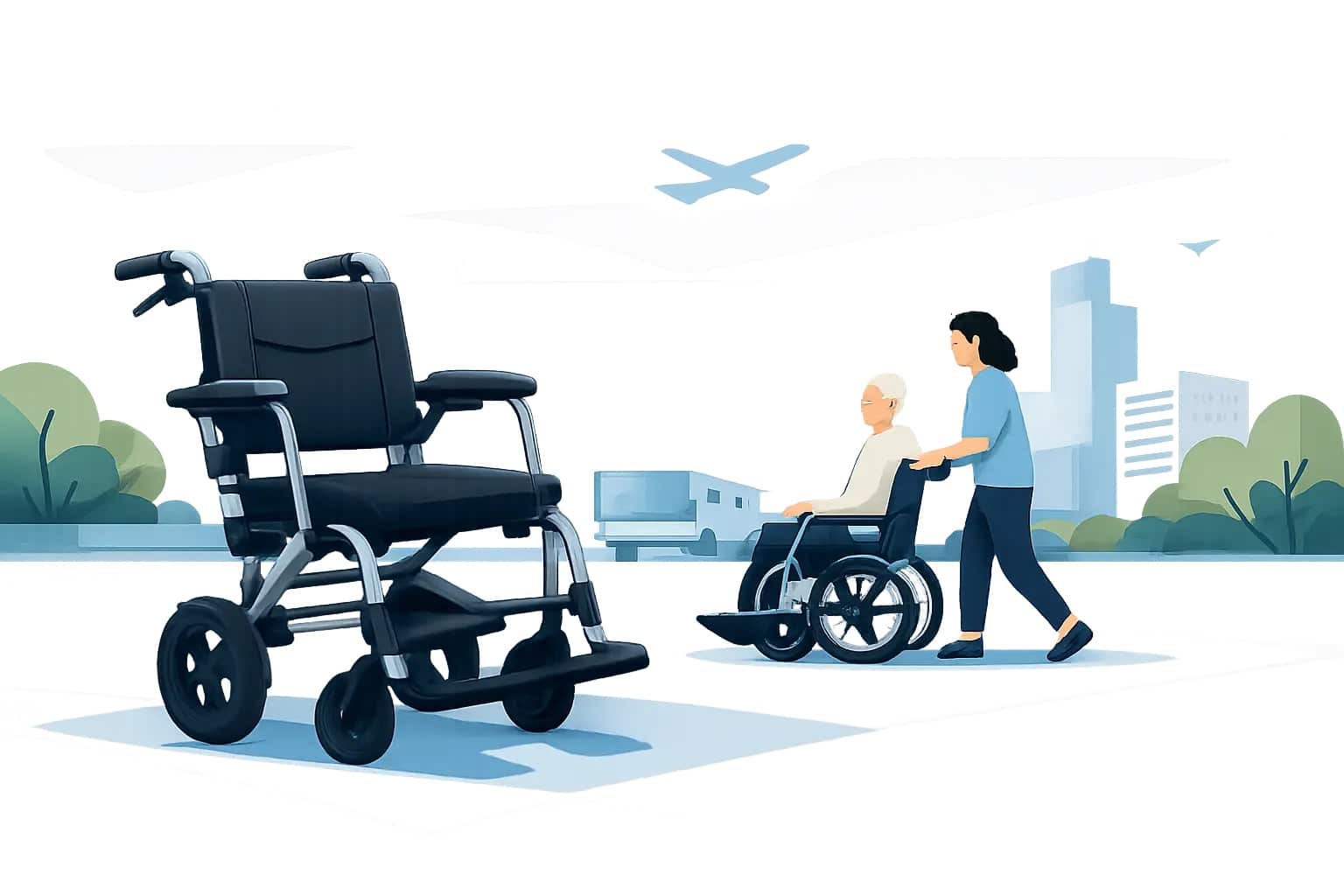
A transit chair can make a hospital appointment, family visit or afternoon in town much more manageable – but only if it is light enough to lift, comfortable enough to use and the right size for the person sitting in it. The best lightweight transit chairs balance portability with the everyday details that affect safety: dependable attendant brakes, supportive seating, practical footrests and wheels suited to the journeys you actually make.
Unlike a self-propelled wheelchair, a transit chair has smaller rear wheels and is designed to be pushed by a companion or carer. This keeps its overall weight and folded size down, making it a sensible choice for car travel, short outings and users who do not need to propel themselves independently.
What makes a lightweight transit chair a good choice?
The headline weight matters, particularly when a chair needs to go in and out of a car boot. Many lightweight transit chairs weigh around 8 to 12 kg, although the figure can vary once footrests, cushions and accessories are fitted. A lower weight is useful, but it should not be the only buying decision. An extremely light chair may have a narrower seat, less padding or a lower maximum user weight.
For many households, a folding aluminium transit chair is the most practical starting point. Aluminium frames are corrosion-resistant and easier to handle than heavier steel alternatives, while a folding mechanism allows the chair to sit in a boot, hallway cupboard or the back of a taxi. Check both the folded width and the height of the folded chair. A chair that folds neatly may still be awkward to lift through a high boot opening.
The best option depends on where it will be used. A compact chair with small solid tyres works well for smooth indoor floors, shopping centres and pavements. If regular trips include uneven paths, older high streets or park routes, larger wheels and more substantial tyres can offer a steadier ride. The trade-off is usually a little more weight and bulk.
Best lightweight transit chairs: features to compare
Chair weight and lifting requirements
Start with the person who will lift the chair most often. A transit chair that looks manageable in a product description can feel very different when it is lifted from ground level, turned sideways and placed into a vehicle. Consider whether a relative or carer has back, shoulder or grip difficulties of their own.
Also look at the maximum user weight. This should provide a suitable margin for the user, without choosing a chair that is unnecessarily wide or heavy. Wider chairs can be more comfortable for some users, but they take up more room in cars and can be harder to manoeuvre through narrow doorways.
Seat width, depth and comfort
A suitable seat width gives the user space without allowing them to slide from side to side. Measure the user while seated, then allow modest clearance on each side for clothing and comfort. If they wear a thick coat in colder weather or need a pressure-relieving cushion, account for that too.
Seat depth is equally relevant. The user should be able to sit back comfortably with their thighs supported, while leaving clearance behind the knees. A seat that is too deep can make transfers more difficult and may encourage slumping. For longer days out, padded upholstery and armrests can make a noticeable difference, but a separate wheelchair cushion may be more appropriate where pressure care is a concern.
Brakes and attendant control
A transit chair should have easy-to-use parking brakes to hold it safely during transfers, on slopes and when the user is getting in or out. Many models also have attendant-operated brakes near the push handles. These give the person pushing better control when travelling downhill and can be particularly reassuring in wet weather.
Check that the handles are at a comfortable height for the regular attendant. Tall carers can find very low handles tiring over a longer journey, while poorly positioned handles can reduce control on kerbs. A simple test in a showroom can reveal more than a specification sheet.
Footrests, armrests and transfers
Swing-away or removable footrests make it easier for a user to approach a chair from the front and can simplify transfers from a bed, sofa or car seat. They also reduce the chair’s length when it is folded or stored. Height-adjustable footplates help support the feet properly, rather than leaving the legs dangling.
Flip-up armrests can be useful where side transfers are part of the routine. If the user needs regular assistance to transfer, a lightweight transit chair should be considered alongside the wider moving and handling plan. The right chair supports independence, but it does not replace appropriate transfer equipment or carer support where these are needed.
Choosing a chair for travel and everyday outings
For occasional journeys, such as medical appointments and visiting family, a compact folding transit chair is often enough. Prioritise a manageable lift weight, a quick folding action and a size that fits the intended car. Before ordering, measure the boot opening rather than only the boot floor. Hatchbacks, saloons and smaller vehicles can have restrictive openings even when the luggage space looks generous.
For regular use, consider the journey from front door to destination. Will the chair need to cross a gravel drive, fit through a narrow porch or negotiate a dropped kerb? Does the user become uncomfortable after 20 minutes? Is there a carer available for every outing? These answers may point towards a slightly heavier chair with improved padding, larger wheels or better attendant braking.
If the user expects to spend prolonged periods seated, or wants to travel independently at times, a self-propelled wheelchair may be a better fit. Its larger rear wheels allow the user to propel themselves, although it is generally less compact and heavier to transport. A transit chair is most effective when its purpose is clear: assisted travel, short-to-medium outings and convenient storage.
Practical checks before buying
Product dimensions should be checked against the user and the home, not viewed in isolation. Measure internal doorways, narrow hallways and the space beside the car. If a wheelchair ramp is already in use, confirm that the chair width is suitable and that there is enough turning space at the top and bottom.
It is also worth considering maintenance. Solid tyres avoid punctures and suit most everyday urban use, while pneumatic tyres may provide a softer ride but need pressure checks. Keep brakes free from dirt, inspect footrests and fasteners regularly, and do not hang heavy bags from the push handles. A bag can make the chair unstable, especially when the user is not seated.
Where a chair is needed after surgery or for a temporary change in mobility, hiring may be more appropriate than buying. For longer-term needs, purchasing a chair that can be serviced and supported gives greater confidence as routines change. Sheen Mobility can help customers compare practical specifications and identify a suitable mobility solution for home and travel.
When lightweight is not the only priority
It is understandable to focus on the lowest possible chair weight, particularly when lifting is difficult. However, a few extra kilograms may be worthwhile for a better-fitting seat, more supportive footrests or improved stability outdoors. The lightest chair is not automatically the easiest or safest chair to live with.
Think about the user’s comfort after the journey, not just whether the chair fitted in the car. A well-chosen transit chair should allow them to attend appointments, enjoy social outings and move around with less fatigue for everyone involved. If measurements, transfers or handling needs are uncertain, seeking specialist advice before purchase can prevent an unsuitable chair becoming an expensive storage item.
The right transit chair is the one that fits the user, the car and the regular routine – making each journey feel more practical and less of a task.