

Leg heaviness, swollen ankles and discomfort after sitting can make an ordinary armchair feel unsuitable. The best chairs for poor circulation are not defined by one feature alone. They should support a safe sitting position, allow you to change position easily and suit the way you use your home each day.
For many people, a well-fitted rise recliner is a practical option because it combines supportive seating with an adjustable backrest, legrest and powered standing assistance. However, an upright high-seat chair or a supportive fireside chair may be the better choice where a simple, firm seat is preferred. The right option depends on your mobility, medical advice, height, leg support needs and available space.
What a chair can and cannot do for circulation
A chair cannot diagnose or treat a circulation problem. Poor circulation can describe a range of conditions, including problems affecting blood flow, vein function, swelling, diabetes-related foot concerns or reduced movement after surgery. If you have new one-sided swelling, a hot or painful leg, skin colour changes, a wound that is not healing, chest pain or sudden breathlessness, seek urgent medical advice rather than relying on a seating change.
That said, unsuitable seating can make everyday discomfort worse. A low, deep chair may leave the knees higher than the hips, press into the back of the legs or make it difficult to stand. Remaining in one position for long periods can also be uncomfortable, particularly for people with limited mobility.
A suitable chair makes regular movement and position changes more manageable. It should give stable support through the back, hips and thighs without creating a hard edge behind the knees. It also needs to help the user stand safely, as getting up regularly can be just as useful as finding a more comfortable seated position.
Best chairs for poor circulation: key features
The most useful features are those that make sitting, standing and changing position easier without compromising support. A rise recliner chair is often chosen because its independent controls allow the backrest and legrest to be adjusted separately. This can help users find a position that is comfortable for reading, resting or watching television rather than being limited to one fixed angle.
Look first at seat height. When seated, feet should normally rest securely on the floor or on the chair’s footplate, with the thighs supported and the knees not forced sharply upwards. A seat that is too high can leave feet dangling; one that is too low can increase pressure through the hips and make standing harder. The user should be able to move forwards in the seat and place their feet beneath them before rising.
Seat depth matters just as much. There should be a small gap between the front edge of the seat cushion and the back of the knees. If the cushion reaches into the knee crease, it may feel restrictive and can be uncomfortable during longer periods of sitting. A shallower seat may be more appropriate for a shorter person, while a taller user may need greater thigh support.
Supportive, level armrests provide a stable place to rest the forearms and push from when transferring. They should not be so low that the user has to lean sideways, or so soft that they collapse under weight. Firm cushions usually make transfers easier than deeply padded seats, although the chair should still feel comfortable enough for regular use.
A pressure-relieving or memory foam seat can be useful for some users, but it is not automatically the best choice. Very soft foam may make a person sink too far into the chair and struggle to stand. For anyone at risk of pressure damage, a clinician or occupational therapist should advise on suitable seating and cushions.
Which chair type is most suitable?
Rise recliner chairs
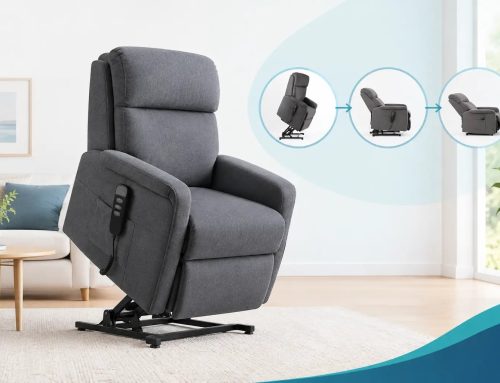
Rise recliners are designed for users who find standing from a chair difficult. The lifting function brings the seat forwards and upwards in a controlled motion, reducing the effort required from the knees, hips and arms. This can support safer transfers for older adults, people recovering from surgery and users with reduced strength or balance.
For circulation-related comfort, choose a model with an adjustable legrest rather than a fixed footstool. A dual-motor or independent-action rise recliner allows the legrest to be raised while the backrest remains closer to upright. This flexibility is useful because some people prefer a modest leg elevation, while others need a more upright position for eating or breathing comfortably.
The trade-off is size and placement. Rise recliners need clear space behind and in front of the chair, particularly if the backrest reclines. Wall-hugger designs can reduce the space needed behind the chair, but it is still essential to measure the room, doorways and route into the property before ordering.
High-seat armchairs
A high-seat armchair is a straightforward choice for someone who does not need a powered lift or reclining mechanism. It usually has a firmer cushion, supportive arms and a higher seat height than a standard lounge chair. This makes it easier to sit down and stand up while keeping the home setting familiar.
This type of chair can suit a person who remains fairly mobile and wants a dedicated supportive seat for the living room or bedroom. It offers less opportunity to vary leg position than a recliner, so it may not be the right choice for someone who spends long periods seated or has been advised to use specific leg positioning.
Manual recliner chairs
A manual recliner can offer a raised footrest at a lower initial cost than a powered model. However, the user must be able to operate the lever or body-weight mechanism and return safely to an upright position. It may not suit someone with weak grip, painful hands, poor balance or difficulty getting out of a reclined chair.
Before choosing one, consider who will operate it every day. A chair that is easy to use independently is generally more valuable than a feature-rich model that requires assistance.
Bespoke and made-to-measure seating
Where standard sizes do not provide a good fit, made-to-measure seating can be worthwhile. This is particularly relevant for very petite or tall users, people with significant postural needs, or those who need a particular seat width, cushion firmness or arm height. A well-specified chair can improve comfort and reduce the need for improvised cushions, which may affect posture or make transfers less safe.
Check the fit before buying
A chair should be assessed for the person who will use it most, not simply selected to match the room. Take measurements while the person is wearing their usual footwear and any orthotic footwear they use indoors. Measure from the back of the buttocks to the back of the knee for seat depth, and from the floor to the back of the knee for an indication of suitable seat height.
Seat width should allow a comfortable fit without squeezing the hips or leaving excessive empty space at either side. The backrest should support the lower back and shoulders without pushing the head forwards. If a headrest is needed for resting, check that it meets the head naturally rather than forcing the neck into an awkward angle.
For a rise recliner, test the full lifting action where possible. The feet should stay stable on the floor as the chair rises, and the user should feel supported rather than tipped forwards. Check the handset is easy to hold and distinguish, particularly where eyesight, dexterity or hand strength are reduced. Battery back-up is also worth considering, as it can allow the chair to return to an upright position during a power cut.
Use the chair as part of a regular routine
Even the most supportive chair is not intended to keep someone in one position all day. Where it is safe and practical, change position regularly, stand for short periods or walk around the room with the appropriate walking aid. Keep commonly used items such as glasses, medication, the telephone and a drink within reach so there is less temptation to overreach or remain seated when assistance is needed.
Avoid placing a separate footstool too high or too far away, as this can put strain through the knees and hips. If leg elevation has been recommended by a clinician, an adjustable legrest gives more controlled support than stacking cushions beneath the calves. Follow any individual advice from a GP, district nurse, physiotherapist or occupational therapist, especially if swelling, ulcers or cardiovascular conditions are involved.
A chair should make daily life easier, not become another obstacle to manage. Measuring carefully, choosing controls the user can operate and asking for specialist guidance where needed will help you select seating that supports comfort, confidence and safer movement at home.