

A toilet frame can make the difference between an uncertain transfer and a safer, more controlled routine. For someone who finds it difficult to lower themselves onto the toilet or stand back up, knowing how to choose toilet frames starts with the person’s movement, strength and bathroom layout – not simply the available space beside the WC.
A correctly selected frame provides stable handholds at the right height and position. It can reduce pressure on painful knees, hips or wrists, support recovery after surgery and help a person retain independence in a familiar bathroom. The wrong style, however, may feel awkward to use, shift during transfers or obstruct access to the toilet.
Start with the type of support needed
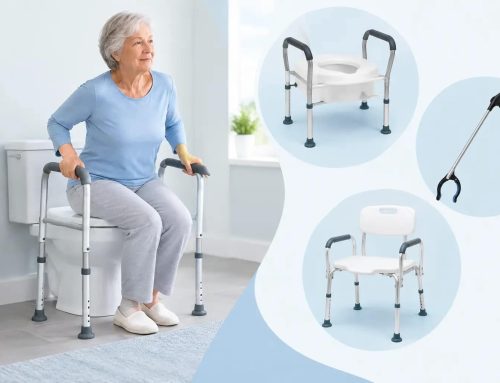
Toilet frames are freestanding supports that sit around the toilet, giving the user armrests or rails to hold when sitting down and standing up. They are particularly useful where wall-mounted grab rails are not suitable, where a permanent fitting is not wanted, or where support is needed on both sides of the body.
Before comparing products, consider how the person currently manages the transfer. Do they mainly need help pushing up to standing? Do they have poor balance when turning? Is one side weaker following a stroke or injury? A person who can bear weight through both arms may benefit from a straightforward frame with padded or moulded handgrips. Someone who needs more support may require a frame with a wider base, integrated arms or additional fixing options.
A toilet frame supports the transfer, but it does not lift the user. If lowering onto the toilet remains difficult because the seat is too low, a raised toilet seat or a combination toileting aid may be more appropriate. In some cases, these products work well together, but clear measurements are needed to ensure there is enough room and the setup remains stable.
Measure the toilet and surrounding space
Bathroom measurements are central when choosing a toilet frame. Measure the width of the toilet pan, the distance between the wall and the toilet, and the clear floor space on both sides. Do not assume that a frame will fit because there appears to be room. Pipe boxing, radiators, vanity units and inward-opening doors can all affect safe positioning.
Check the width between the frame’s armrests or side rails. The user should be able to sit comfortably without their hips being squeezed, while still having handholds close enough to use naturally. A frame that is too wide can force the person to reach outwards, reducing control when they need it most.
Also consider the route into the bathroom. A larger frame may fit around the toilet but make it harder for a wheelchair, walking frame or carer to enter and turn. Where space is limited, a compact or folding model can be useful, provided it still offers adequate stability and is easy for the user to operate.
Check the floor surface
Most toilet frames are designed for a level, dry bathroom floor. Uneven tiles, thick mats or wet flooring can affect grip and make a freestanding frame less secure. Rubber ferrules or non-slip feet should sit flat and make full contact with the floor.
Avoid placing a loose bath mat beneath a frame. If the bathroom floor regularly becomes wet, address the source of the water as well as selecting suitable equipment. A frame is safer when the person can approach it with dry footwear and a clear route.
Set the correct height
Height adjustment is one of the most useful features on a toilet frame. The armrests should allow the user to place their hands down comfortably, with elbows slightly bent when seated. This gives them a stable position from which to push up rather than pulling themselves forward or twisting their body.
A frame set too low may increase the effort required to stand. One set too high can lift the shoulders and make the arms less effective. Where possible, test the height with the user wearing the footwear they normally use at home. Slippers with a soft sole, for example, may alter standing height and grip compared with shoes.
The seat height also matters. If the user’s knees are raised well above their hips when seated, standing can be more demanding. A raised toilet seat may reduce this effort, but the additional height must be considered alongside the toilet frame. The user still needs to reach the rails safely without leaning or overreaching.
Compare freestanding, fixed and folding designs
The best toilet frame depends on whether the priority is flexibility, maximum stability or ease of storage.
A freestanding toilet frame is often the most straightforward choice for a standard bathroom. It can usually be positioned around the WC without installation, making it suitable for rented homes or temporary recovery periods. Its stability depends on the frame being correctly adjusted, placed on a level surface and used within its stated weight limit.
Some frames can be fixed to the floor or wall for added security. This can be a sensible option for a long-term user who transfers with significant force, but fitting should be assessed carefully. Bathroom walls, floor construction and the location of pipes all need consideration before any drilling takes place.
Folding toilet frames are useful where the bathroom is shared or storage is needed between uses. The trade-off is that folding mechanisms must be locked correctly every time. They are best suited to users who can manage the mechanism safely, or where a carer will set the frame in place.
Check weight capacity and overall stability
Every toilet frame has a maximum user weight. This should never be treated as a rough guide. Choose a frame rated for the individual’s body weight, taking account of how much force they place through the arms when standing. Someone who heavily relies on the rails may need a more substantial design than a person using them only for balance.
Look at the shape of the base and the number of contact points with the floor. A wider footprint can improve stability, although it requires more room. Frames with crossbars or reinforced construction may feel more secure, but they must not create an obstacle for feet, walking aids or a carer’s position.
The frame should not rock, slide or lift at one side when tested gently. All height-adjustment legs should be set evenly, and locking clips or pins should be fully engaged. Check these points regularly, particularly after cleaning, moving the frame or changing the toilet seat height.
Think about the user’s hands, arms and balance
Toilet frames are not all used in the same way. Arthritis, reduced grip, tremor, shoulder pain and one-sided weakness can change which design is comfortable and safe.
Padded armrests may be more comfortable for a person with tender hands, while textured moulded grips can help where hand strength is limited. Some people prefer a continuous rail that allows them to move their hand into the most secure position during the transfer. Others benefit from clearly defined armrests that make it easier to judge where to place their hands.
Observe whether the user approaches the toilet from the front, side or with a walking aid. If they turn and reverse towards the seat, the frame must leave enough space for their feet and allow them to reach both rails before beginning to sit. A frame cannot compensate for a rushed or poorly balanced transfer, so it may be helpful to seek advice from an occupational therapist where falls, pain or repeated near-misses are a concern.
Allow for carers and daily cleaning
A toilet frame should support the person without making personal care more difficult. If a carer assists with transfers, leave enough room for them to stand safely and maintain good posture. A very narrow gap between the frame and wall may restrict their movement, while a large frame may prevent close access from the side.
Choose a design that can be cleaned easily. Smooth, wipe-clean surfaces and accessible adjustment points make everyday hygiene simpler. Check beneath the rails and around the feet, where moisture and cleaning products can collect. Regular cleaning also makes it easier to spot worn ferrules, loose fittings or damage.
When a toilet frame may not be enough
A toilet frame is a practical solution for many people, but it is not suitable for every situation. A person who cannot safely bear weight through their legs, has frequent falls, needs substantial assistance from another person or has severe balance problems may need a different transfer solution. A raised toilet seat with arms, a commode, wall-mounted rails or a more comprehensive bathroom adaptation may be better suited to their needs.
It is also worth reviewing equipment after a change in health, surgery, hospital discharge or a fall. What worked during a short recovery period may no longer be the right setup for long-term use.
The right toilet frame should feel dependable rather than noticeable: correctly sized, stable under the hands and positioned to make an everyday transfer less demanding. Taking time to measure the bathroom and match the frame to the user’s movement can support safer, more independent living at home.